

Professional vs over-the-counter teeth whitening
Store-bought strips and a dentist's whitening both bleach teeth. The difference is mainly who supervises it and how the product is held against your teeth.
The options compared
Whitening toothpaste mostly polishes away surface stain, such as coffee and tea, and does not change the colour of the tooth itself. Strips, trays and in-office whitening bleach.
Ways to bleach teeth, compared
- Where it comes from
- Store-bought strips and gels A pharmacy or store shelf
- Take-home trays from a dentist A dentist, as a take-home kit
- In-office whitening A dentist, done in the chair
- How it reaches the teeth
- Store-bought strips and gels Flexible strips or a gel painted on, sized for most mouths
- Take-home trays from a dentist A tray worn at home, holding the whitening gel against the teeth
- In-office whitening Whitening gel applied by the dental team, with the gums protected
- Who guides it
- Store-bought strips and gels You, from the box instructions
- Take-home trays from a dentist Your dentist sets it up; you wear it at home
- In-office whitening The dental team, during the appointment
- Where it falls short
- Store-bought strips and gels Strips can miss the edges and gaps between teeth
- Take-home trays from a dentist Needs wearing as directed, at home
- In-office whitening Needs a visit to the office; the teeth and gums can be tender afterwards
Strips vs trays
Strips are flat and one-size-fits-most, simple and easy to find.
A tray holds gel against all of the teeth it covers. Trays from a dentist are meant to fit your mouth, which keeps the gel on the teeth.
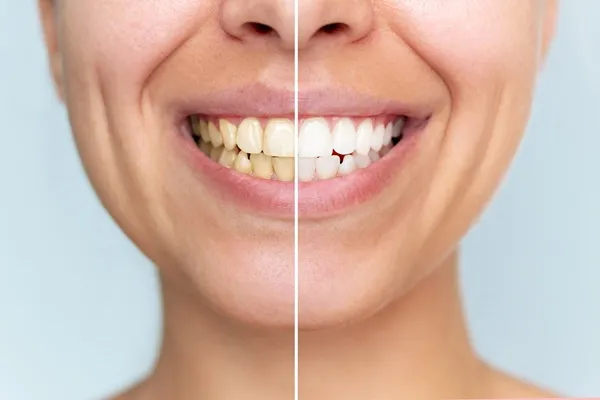
Professional vs over-the-counter
The American Dental Association says over-the-counter products contain peroxide at lower concentrations than in-office or dentist-prescribed, at-home bleaching techniques. A dentist can also check first that your teeth and gums are healthy enough to be whitened.
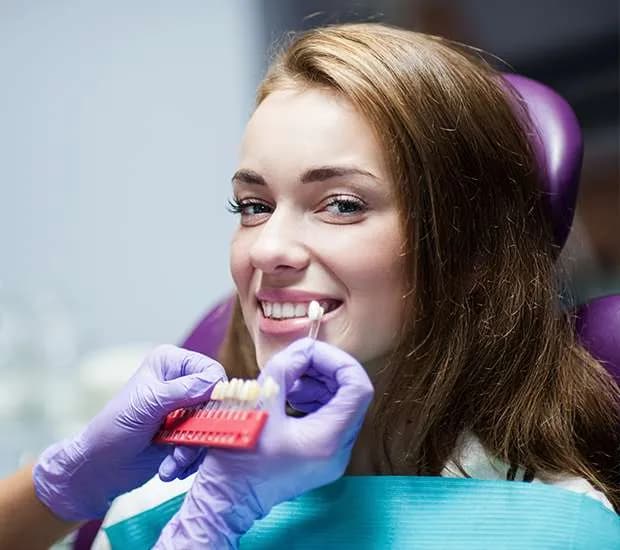
Whitening only works on natural tooth enamel. Crowns, veneers and fillings do not change colour, so whitening teeth next to them can leave a visible mismatch. A dentist can tell you that before you start.
We offer both in-office whitening and take-home kits.
Safety and sensitivity
The American Dental Association says temporary tooth sensitivity and gum inflammation are the most common adverse effects of whitening. If you notice either, stop and ask your dentist.
Check with a dentist before whitening if you have cavities, gum disease, worn enamel or existing sensitivity, since whitening can make those uncomfortable. Follow the directions on any product. Products with the American Dental Association Seal of Acceptance meet rigorous standards for safety and effectiveness, as evaluated by the ADA’s Council on Scientific Affairs.
Next step
If you would like to whiten with a dentist’s guidance, call the office and ask about in-office or take-home whitening. Whitening can only be judged on your own teeth, so it starts with a look at them.