

What is periodontal disease and what does it do?
It is an infection of the gums and the bone around your teeth, and it can be painless.
What periodontal disease is
Periodontal disease is gum disease: an infection of the gums and the bone that hold your teeth in place. It starts with plaque, the sticky film of bacteria that forms on teeth every day. Left in place, plaque hardens into tartar along the gumline, where a toothbrush cannot remove it, and the gums become inflamed.
It comes in two broad stages. In the early one, gingivitis, the gums are red, swollen and bleed easily, but the bone is not yet affected. The American Academy of Periodontology says gingivitis is reversible with professional treatment and good at-home oral care. If it is not treated, it can progress to periodontitis, where the infection reaches below the gumline and begins to break down the bone that supports the teeth.
What it does
As the gum separates from the tooth, pockets form, and bacteria settle deep in them where daily cleaning cannot reach. Over time the infection can destroy some of the bone around the tooth. The gums recede, the teeth can loosen and shift, and teeth can eventually be lost.
Gum disease can be painless, so a routine exam can find it before you notice anything. The National Institute of Dental and Craniofacial Research says the main goal of treatment is to control the infection, which is why finding it early matters.
The American Academy of Periodontology says people with diabetes are more likely to develop periodontal disease, and that periodontal treatment has been shown to improve blood sugar levels in people with diabetes.
Signs to look for
Call the dentist if you notice any of these, even if nothing hurts.
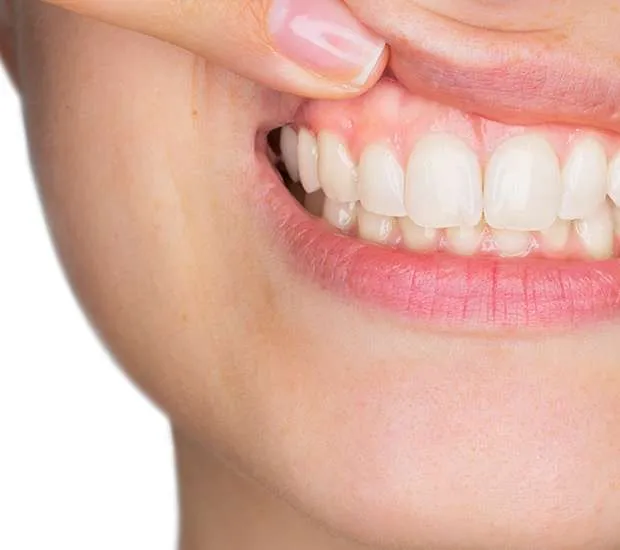
Gums that bleed when you brush or floss
Healthy gums do not usually bleed. Bleeding can be an early sign of inflammation.
Red, swollen or tender gums
Healthy gums are pink and fit snugly around each tooth.
Gums that look like they are pulling back
Teeth can look longer as the gum recedes and the root shows.
A bad taste, or breath that does not clear
Bacteria and infection in the pockets under the gum can cause it. With painful, swollen gums it can be an abscess, so call the office the same day.
Teeth that feel loose, or a bite that has changed
It can mean the bone supporting the teeth has been affected. This needs to be looked at soon.
A partial denture that no longer fits the same
Changes in the gum or bone can change how a denture sits.
Get medical care promptly if your face or jaw swells or you have a fever. Call the office, or seek emergency care if you cannot swallow or breathe.
What raises the risk
Plaque is the cause, but some things make gum disease more likely or harder to control: smoking and other tobacco, diabetes, a family history of gum disease, some medicines that dry the mouth, and hormonal changes such as pregnancy.
The American Academy of Periodontology says tobacco can hide the symptoms commonly associated with periodontal disease, such as bleeding gums.
How it is found, and how it is treated
A dentist finds gum disease by looking at the gums, measuring the depth of the pocket around each tooth with a small probe, and taking x-rays to see the bone. Deeper pockets and bone loss point to periodontitis; shallow pockets with bleeding point to gingivitis.
Treatment follows the stage. Gingivitis is treated with a professional cleaning and better home care. Periodontitis needs the tartar and bacteria cleaned from below the gumline, often through a deep cleaning (scaling and root planing), and sometimes more. Regular maintenance visits after that help control it.
We also offer LANAP, a laser treatment for gum disease performed with a Millennium Nd:YAG laser. Which approach fits depends on what your exam shows.

What you can do at home
Brush twice a day, as the American Dental Association recommends, clean between your teeth every day, and keep your check-ups and cleanings. That routine helps lower the risk of gum disease.
Home care cannot remove hardened tartar, so it does not replace the professional cleaning. If your gums bleed or have changed, have them checked before they hurt.
Next step
If your gums bleed, have pulled back, or it has been a while since your last exam, call the office and ask for a check. We treat gum disease, including with LANAP.