


Clear braces and aligners in Winchester
This is what most people mean by clear braces: a set of clear trays that move your teeth a little at a time, with nothing bonded to them and nothing anyone has to notice. They are planned and fitted here, by the dentists you already see.
Done by your own dentist
Planned, fitted and reviewed in this office, with no separate practice to register with.
Invisalign, ClearCorrect or in-house
All three are offered here, and which one fits your teeth is settled at the consultation.
Checkups carry on as normal
Your cleanings, your x-rays and your aligner reviews are the same appointments with the same people.
Aligners or braces?
Both move teeth. They differ in what you wear, what it costs you day to day, and, most of all, what each one can do.
Clear aligners and fixed braces, compared
- What you wear
- Clear aligners A series of clear trays, changed every week or two
- Fixed braces Brackets bonded to the teeth with a wire between them
- What people see
- Clear aligners Very little, at conversational distance
- Fixed braces Visible, though ceramic brackets are less so
- Eating and cleaning
- Clear aligners Taken out to eat and to brush, so nothing changes
- Fixed braces Everything stays in; brushing around brackets takes longer
- Visits
- Clear aligners Mostly checking progress
- Fixed braces More often, for adjustments
- Who it suits
- Clear aligners Crowding, spacing and mild-to-moderate correction, in someone who will wear them
- Fixed braces Anything, including cases aligners cannot move
- Who it does not
- Clear aligners Someone who will not wear them 20‑odd hours a day, and bite problems that need more force than a tray can apply
- Fixed braces Nobody it rules out, which is the trade for how it looks
From consultation to retainer
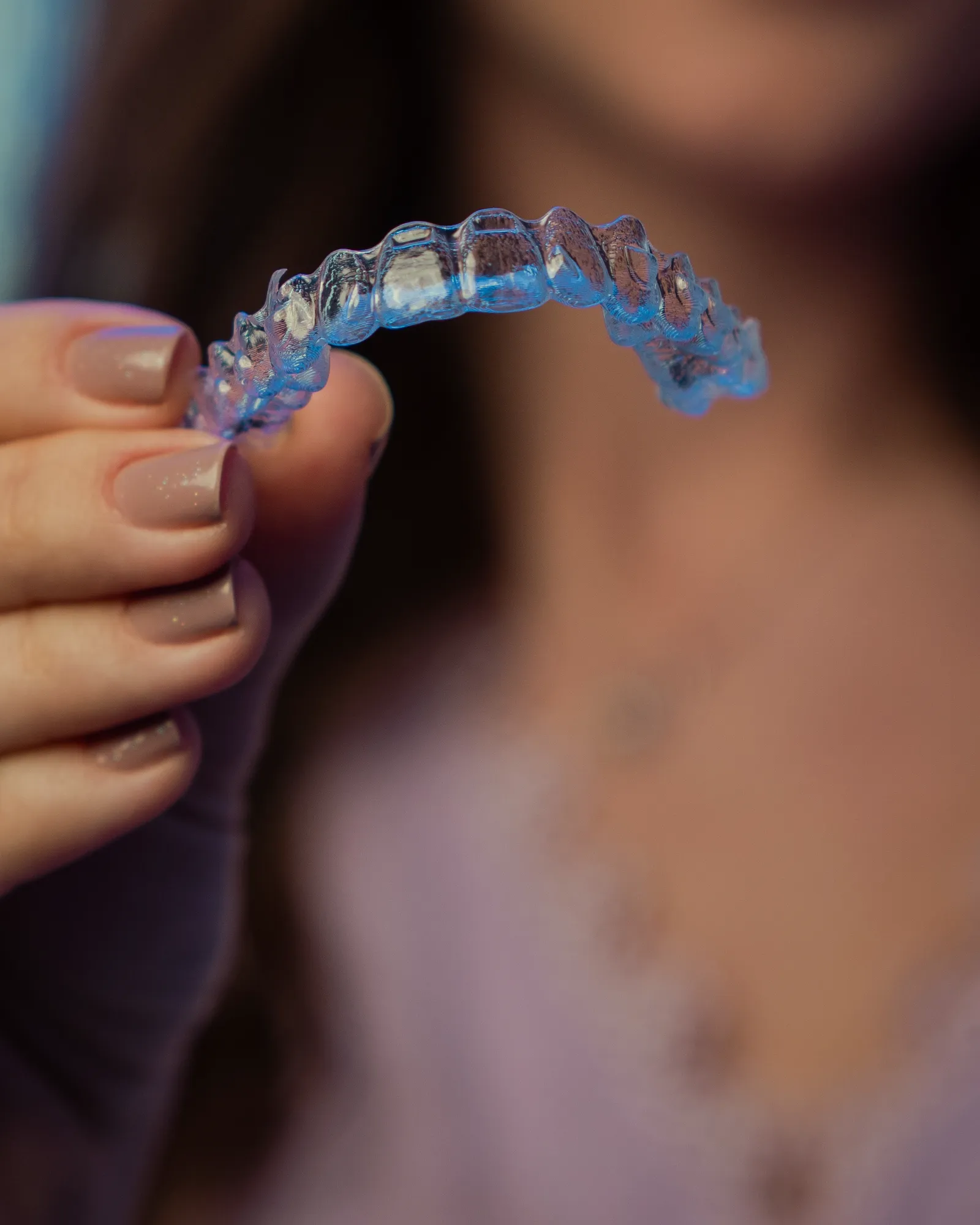
The consultation
We look at your bite and say whether aligners are the right tool for it. Some cases are not, and you will be told so at this visit.
Records and the plan
Impressions or a scan, photographs, and x-rays, which together become the plan for how the teeth move and in what order.
Your trays arrive
A numbered series, each one slightly different from the last. You get the first few and the instructions that go with them.
Wearing them
Changed on a schedule, out for meals and brushing, in for everything else. Short reviews along the way to check the teeth are where the plan says.
The retainer
Teeth drift back if nothing holds them. The retainer is the part that makes the previous four count.
The things it is good at
Aligners handle these cases well.

- Front teeth that overlap or have crowded together over the years.
- A gap between the front teeth, or spacing across the arch.
- Teeth that have drifted since you had braces as a teenager and stopped wearing the retainer.
- A bite that is close to right and needs a small correction rather than a large one.
- Wanting it done without it being obvious at work.


The dentist who does your checkups runs it
Aligner treatment is months of small check-ins, not one big appointment. Doing it where you already go means those check-ins fit into visits you were making anyway, with someone who has your history in front of them.
The alternative is a drive to an orthodontist in another town for every check-in.
A consultation tells you whether aligners will do what you want.

Decherd · 5 min 
Cowan · 10 min 
Estill Springs · 10 min 
Huntland · 15 min 
Belvidere · 15 min 
Tullahoma · 20 min 
Sewanee · 20 min 
Monteagle · 25 min 
Lynchburg · 25 min 
Manchester · 25 min
The questions that decide it
Are clear braces and clear aligners the same thing?
In the sense most people mean it, yes. “Clear braces” and “invisible braces” are what clear aligners usually get called. In the literal sense, no: braces are fixed to the teeth and stay in day and night, and an aligner is a removable tray with nothing stuck to anything.
How many hours a day do I have to wear them?
Most of the day and all night, out only to eat and to brush. The exact number is instructed per case. Aligners only move teeth for the hours they are in your mouth. A tray sitting in its case does nothing, and a plan built on twenty-odd hours does not survive being worn for twelve.
Can I eat with them in?
No. They come out for meals and for anything that is not water, then go back in once you have brushed. You take them out to brush, so brushing works the way it did before.
How much do clear aligners cost?
The price follows how far the teeth have to move, which decides how many trays the plan needs. A figure comes after someone has looked at your bite; call to set that up.
Am I too old for this?
No. Adults of any age are treated, including people whose teeth drifted years after braces. What matters is the health of the bone and the gums holding the teeth, not how old you are.
Do you treat children and teenagers?
Whether aligners suit a younger patient depends on how far the adult teeth have come in and on whether they will wear them, which is the whole treatment. It is decided at a consultation rather than by age. Bring them in and we will tell you whether it is the right moment or whether waiting is better. For younger children, the myofunctional therapy and early orthodontics page covers what's offered before aligners are an option.
Myofunctional therapy and early orthodonticsDoes insurance cover it?
Sometimes, under orthodontic cover rather than general dental, and often with a lifetime maximum rather than a yearly one. We will do our best to check your plan before anything is ordered, but please bring your plan details, and the patient is ultimately responsible for the cost. Insurance is covered on our patient information page.
Patient information