

How to deal with a chipped tooth
Rinse with warm water, hold a cold compress to your face if it swells, and call the office. A chipped tooth can often be repaired.
What to do first
For a cracked tooth, the American Dental Association says to rinse your mouth with warm water right away to clean the area, and to put cold compresses on your face to keep any swelling down. Then call the office and say what happened.
The ADA says to see your dentist, or go to the emergency room, if there is excessive bleeding, the bleeding will not stop, or you are in a lot of pain.
An over-the-counter pain reliever, taken as the label says, can ease the ache until the tooth is examined. A chip that does not hurt still deserves a call, because only an exam shows how far the damage goes.
Not every crack is the same
The ADA lists brittle teeth, teeth grinding and injury among the reasons a tooth cracks or breaks. The American Association of Endodontists describes four kinds of crack, and an exam shows which one you have.
Craze lines
Tiny cracks that affect only the outer enamel. The AAE says these cracks are extremely common in adult teeth.
Fractured cusp
A piece of the chewing surface breaks off, often around a filling.
Cracked tooth
A crack extends from the chewing surface of the tooth vertically toward the root.
Split tooth
A crack with distinct segments that can be separated. The AAE says a split tooth cannot be saved intact.
How a chipped tooth is repaired
The American Association of Endodontists says that if you have chipped or fractured your tooth’s crown, it is likely it can be repaired, either by reattaching the broken piece or by putting a tooth-colored filling in place. It adds that an artificial crown, or cap, may be needed to restore the tooth, and that when the pulp is exposed or damaged after a crown fracture, root canal treatment may be needed.
In our office in Winchester, TN, a chip is repaired with bonding, a veneer or a crown, depending on how much of the tooth is left. Our preferred crown material is solid zirconia. Root canals are done here too.
Bonding rebuilds the missing corner with tooth-colored material. A veneer is a thin shell placed over the front of the tooth. A crown covers the whole visible part of the tooth, which suits a tooth too damaged for a smaller repair.
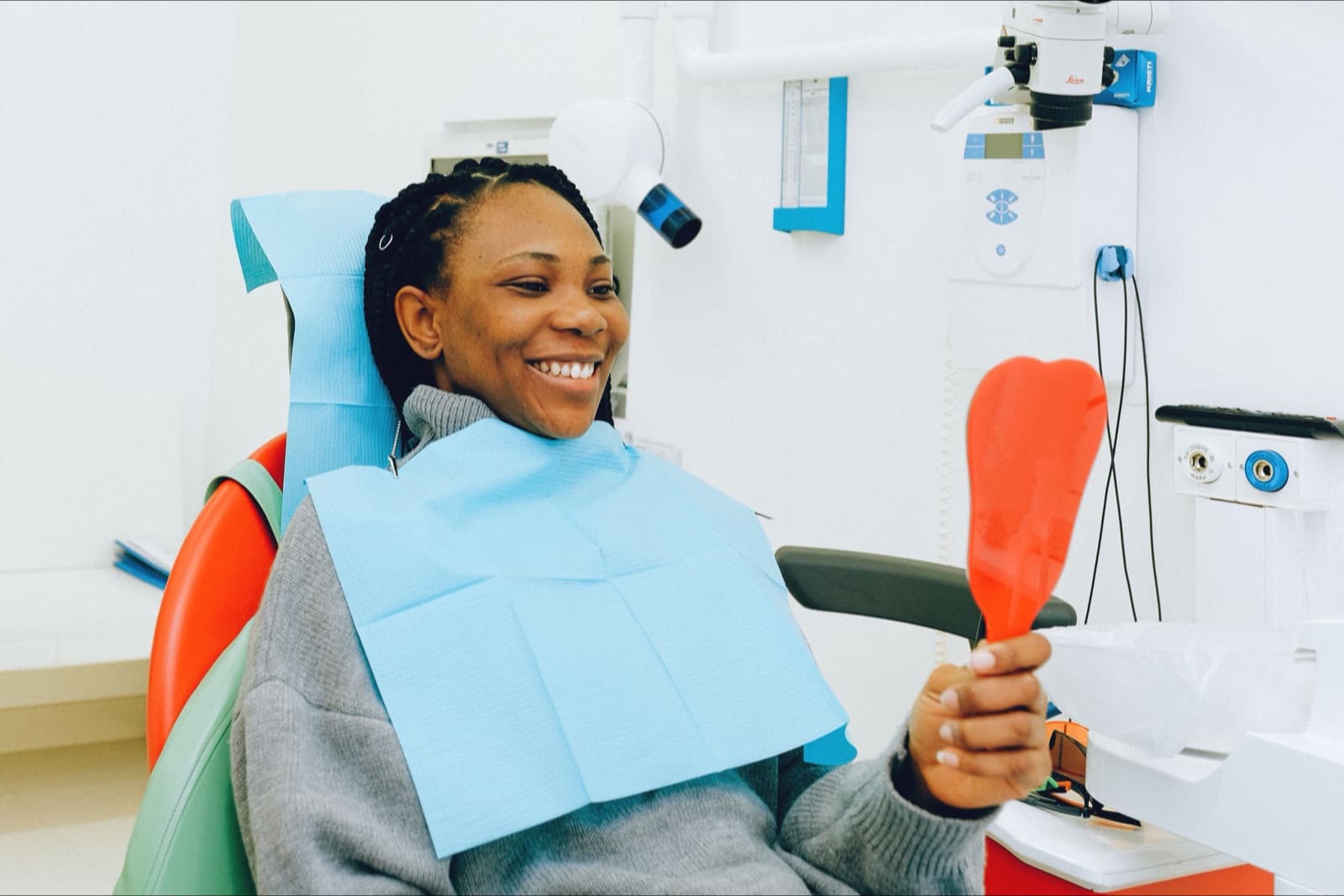
When a chip is more than cosmetic
A small chip that does not hurt is easy to ignore. The American Association of Endodontists says the symptoms of a cracked tooth range from erratic pain when you chew your food to sudden pain when your tooth is exposed to very hot or cold temperatures.
Pain like that is a reason to call the office, even if the chip looks small. The AAE describes a fractured cusp as a piece of the chewing surface that breaks off, often around a filling, so say if the broken tooth already has one.
Grinding is on the ADA’s list of reasons a tooth cracks. If you grind your teeth, tell the office, since night guards and TMJ treatment are offered here too.
What to tell the office when you call
Tell the staff how and when the tooth chipped or broke, which tooth it is, and whether it already had a filling or a crown. Say whether it hurts, and whether chewing, heat or cold brings the pain on.
Mention any swelling, any bleeding, and any sharp edge that is cutting your tongue or cheek. The office will tell you when to come in, and an exam and x-rays show how deep the chip goes and which repair fits.
If dental work makes you nervous, say so. Sedation is available here, from nitrous oxide to oral to IV, for patients 13 and over.
Next step
If a tooth has chipped or cracked, call the office and describe what happened. We repair chips with bonding, veneers and crowns, and root canals are done here.