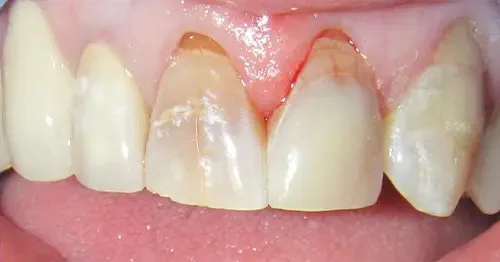
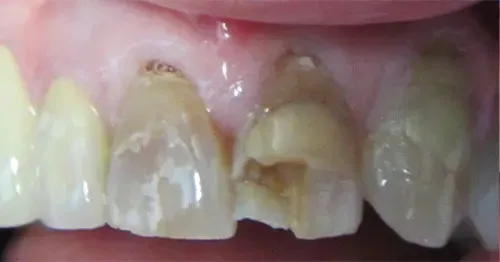
Fractured front tooth
He broke a front tooth. In less than an hour it was rebuilt to its full shape.



A damaged or missing tooth can be rebuilt, and how much of it is left decides how. Crowns, bridges and root canals are all done here.
Solid zirconia crowns
The material the practice prefers for crowns. Other materials are available.
Bio-ceramic root canal seal
How a root canal is closed here once the tooth has been cleaned.
Crowns, bridges and root canals
All three offered at this office, with extractions and implants for when a tooth cannot be kept.
Every damaged tooth gets the same first question: how much of it can be kept? An exam and x-rays answer it, and the answer picks the treatment.
Decay or a small break. The damaged part is removed and the tooth is built back up.
Damage too big for a filling, in a tooth that does not need a crown. A piece made to fit the tooth is bonded in.
A large repair, a crack or a worn-down tooth. A crown covers the whole visible part and holds it together.
Damage that has reached the nerve. The inside is cleaned out and sealed, then a crown goes over the top.
A tooth that is gone. Crowns on the teeth either side hold a replacement tooth between them.
A tooth that is gone, replaced from the root up: a post in the jaw carries the new tooth.
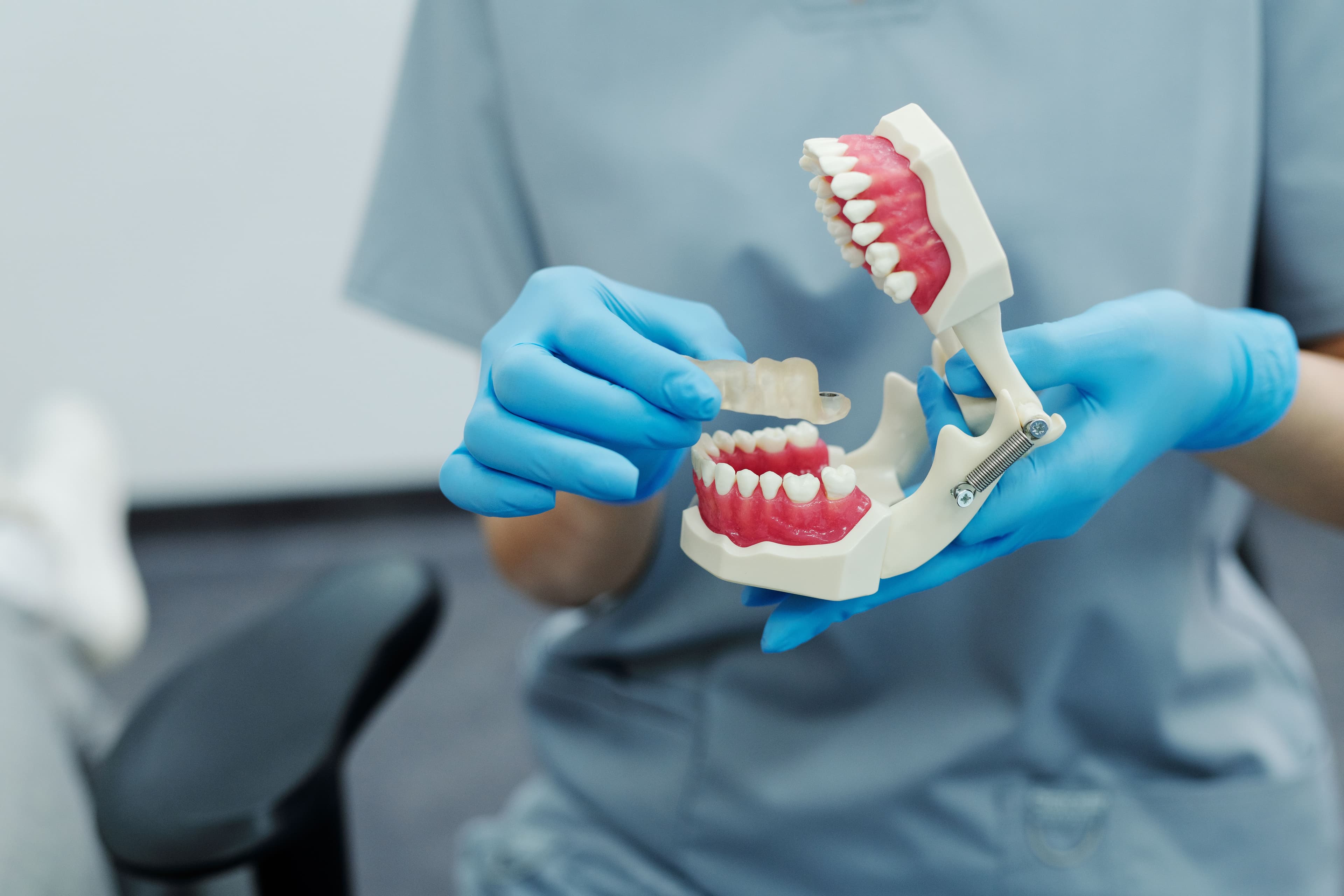
A crown is a cap that fits over the whole visible part of a tooth. It is what a tooth needs when a filling would no longer hold it together: a large repair, a crack, a tooth worn thin, or one that has had a root canal.
The practice’s preference is solid zirconia, a single piece of tooth-colored ceramic rather than a shell with something else underneath. Other materials can be used, and which one suits a given tooth is part of the plan for it.
A little of the outer tooth is removed to leave room for the crown to fit over it.
It is made to the shape of your tooth and the way you bite, so it meets the tooth opposite it properly.
The crown is tried on, the fit and the bite are checked, and it is cemented in place.
How many appointments that takes depends on the tooth. We will tell you what to expect for yours before you start.
When the damage is too big for a filling but the tooth does not need a crown, an inlay or an onlay can be the middle ground. An inlay sits inside the tooth. An onlay also covers its points, which is why it is sometimes called a partial crown.
Both are made from an impression of your tooth, in tooth-colored porcelain or composite, and bonded in place. A temporary covers the tooth until the permanent piece is ready. Less of the tooth is shaped away than for a crown, so more of it is kept.
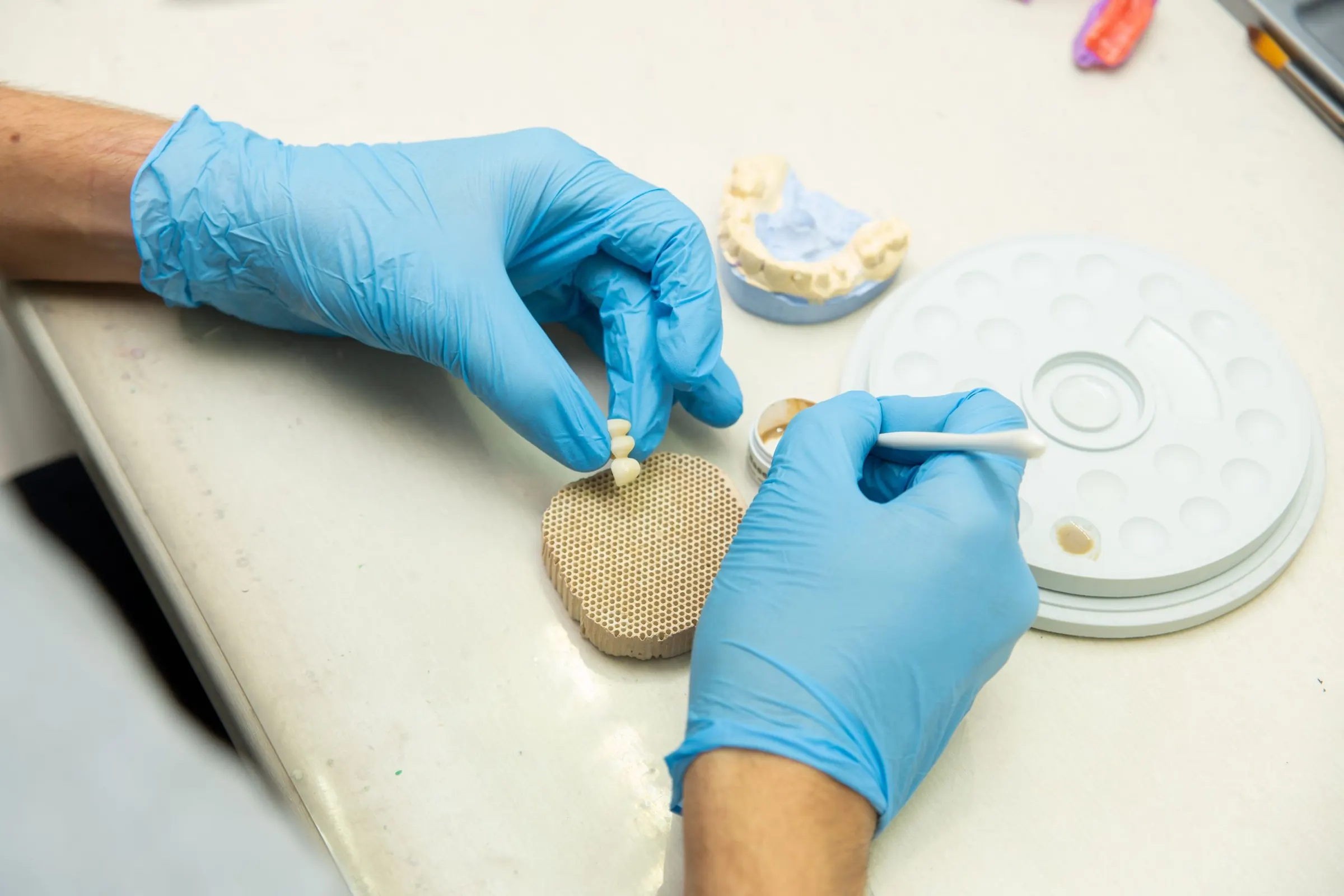
A bridge replaces a missing tooth by borrowing its neighbors. The teeth on either side are shaped and capped with crowns, and a replacement tooth is joined between them, so the whole thing is one piece, fixed in place.
Whether the neighboring teeth are strong enough to carry it is the first thing checked.
An implant replaces the missing tooth without involving the ones next to it: a post is placed in the jaw and the new tooth is fixed to that.
Which one suits you depends on the gap, the teeth around it and the bone underneath.
How implants work herePatients of this practice, shown with their consent.
He broke a front tooth. In less than an hour it was rebuilt to its full shape.
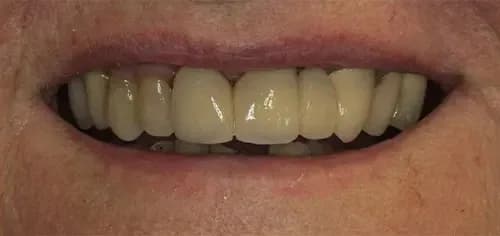
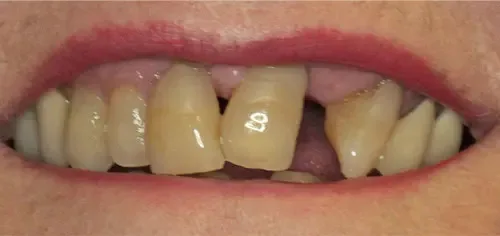
A crooked front tooth with a gap beside it. A bridge brought the row into line.
When decay or a crack reaches the nerve, the choice is between taking the tooth out and treating the inside of it. That treatment is a root canal: the damaged tissue is cleaned out, the space is sealed, and a crown goes over the top so the tooth can take a bite again.
Root canals, crowns and extractions are all done in this office, in Winchester, TN.
The seal is bio-ceramic. Dr. Orr uses bio-ceramic sealing for root canals “to ensure elimination of infection potential.”
An exam and x-rays show whether the tooth can be saved. Nothing is decided on the phone.
Available with sedation, from nitrous to IV.
One million percent recommend Winchester Family Dentistry as the best experiences I’ve ever had in my 75 years of major dental needs. I consider Dr. Garrett Orr a MASTER SCULPTOR! I came to him about two years ago after a very major botched six-tooth permanent bridge — my upper front teeth. (Different local dentist.) They were too short and I had gone a year very embarrassed about my ugly smile. Dr. Orr rebuilt my teeth, using my original smiling photos as reference. He nailed it 100! I now proudly smile JUST TO SHOW OFF MY TEETH. Dr. Orr is a fine Christian man. Very friendly and professional. The entire practice is top notch with advanced modern equipment. His staff is also very friendly and efficient. You won’t be disappointed!
Judy Marler · Google review








Rebuilding does not always mean one tooth at a time.

When the damage runs through the upper and lower teeth, the repair is planned as one piece of work rather than a tooth at a time. That is a full-mouth reconstruction. It can follow an accident, decay or gum disease, years of grinding, or teeth lost over time.
What it includes depends on your mouth: crowns, bridges, inlays and onlays, root canals, extractions, implants or dentures, in whatever combination is needed. Some of it is surgery, so your general health is part of the plan. It can also be done for the upper or the lower teeth alone.
It starts with an exam and x-rays, and the plan is talked through before anything begins. The most essential work comes first and the cosmetic work last.
Several materials are used for crowns, and the practice prefers solid zirconia. Which material is right for a particular tooth is worked out when the crown is planned.
An exam and x-rays show how much of the tooth is sound and whether the damage has reached the nerve, which is what decides it.
It depends on where the break runs and how deep it goes. A chip may need only a filling or a crown. A crack that reaches the nerve may need a root canal first. A crack that runs far below the gum line may mean the tooth cannot be kept. It takes an exam to know which, so call rather than waiting.
The American Dental Association says to rinse your mouth with warm water and put cold compresses on your face to keep any swelling down, then to see your dentist, or go to the emergency room if the bleeding will not stop or the pain is severe. Call the office and describe what happened.
How to deal with a chipped toothNeither is better in general. It depends on the gap, the teeth either side of it and the bone underneath. A bridge uses the neighboring teeth for support, which means shaping them. An implant leaves them alone and replaces the root as well. Both are done here, and the exam shows which one fits.
Each is priced differently, and what drives the price is different for each. For a crown it is the material and how much has to be built up underneath it. For a bridge it is how many teeth it spans. For a root canal it is which tooth it is and how many canals it has. Insurance changes what you pay on top of that. No figure would mean much before someone has looked at the tooth, so call and we will go through yours.
Many plans cover part of this work, and the details differ by plan. We will do our best to check yours before treatment starts, but please bring your plan details, since the patient is ultimately responsible for the cost. New patients are welcome, and the patient information page covers insurance.
Patient informationTell us when you call and again when you arrive, so everyone you meet that day knows before any work on a tooth begins. We have weighted blankets if you would like one. And if the chair itself is the hard part, sedation is available: nitrous oxide, oral or IV, for patients 13 and over.
Our sedation dentistry options