
New dentures
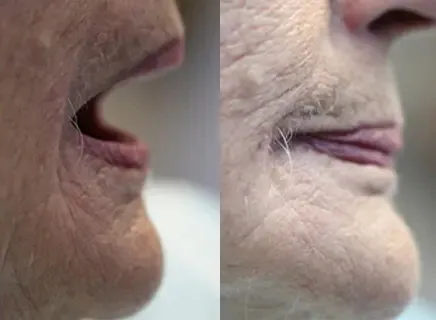
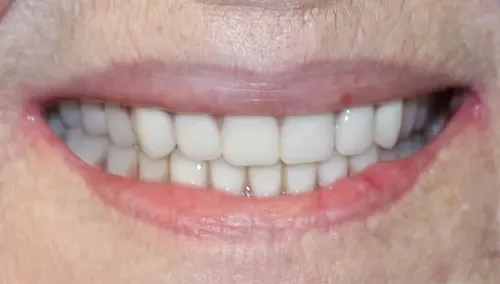
Her old dentures were so unstable they couldn’t hold her lips forward in their natural position. The new set supports the lips and the face again.


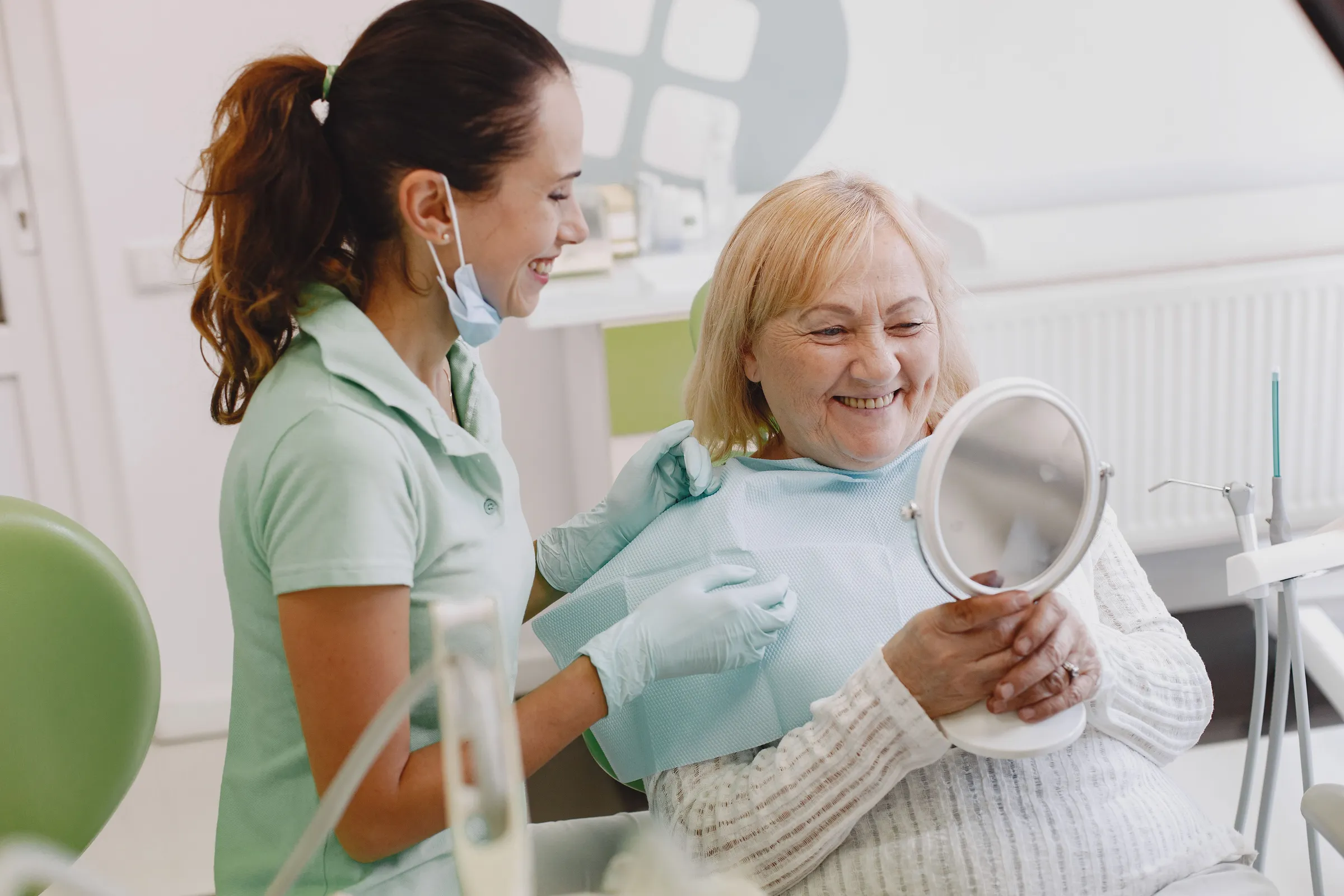
Full dentures, partial dentures and dentures held in place by implants, planned and fitted here. If you already wear a set, it can be copied digitally when it is damaged, or retrofitted to implants.
Full, partial and implant-supported
All three are offered here, so choosing between them is one conversation.
A digital copy of the one you have
A damaged denture, or one that simply fits well, can be copied digitally for a fast turnaround.
Retrofitted to implants
A denture you already wear can be retrofitted to implants, so it stops resting on the gum alone.
Which one fits follows from how many natural teeth you have left and what you want holding the denture in. The exam settles it.
Full, partial and implant-supported dentures, compared
Implant-supported is the full-arch option. The dental implants page covers it in full.
Full-arch implantsIf the teeth you have left need to come out, an immediate denture can be made beforehand, from impressions taken while those teeth are still in place. It goes in at the same visit the teeth are removed, so you leave with a full smile and do not go without teeth while you heal. It also covers and protects the extraction sites while they close.
Because it is made before the extractions, it cannot fit as closely as a denture made afterwards. The gums and jaw change shape as they heal, so an immediate denture needs adjusting along the way, and once healing is done it is relined or replaced with a conventional one.
A set of dentures is made in stages, and each stage is a chance to say what is not right before the next begins.
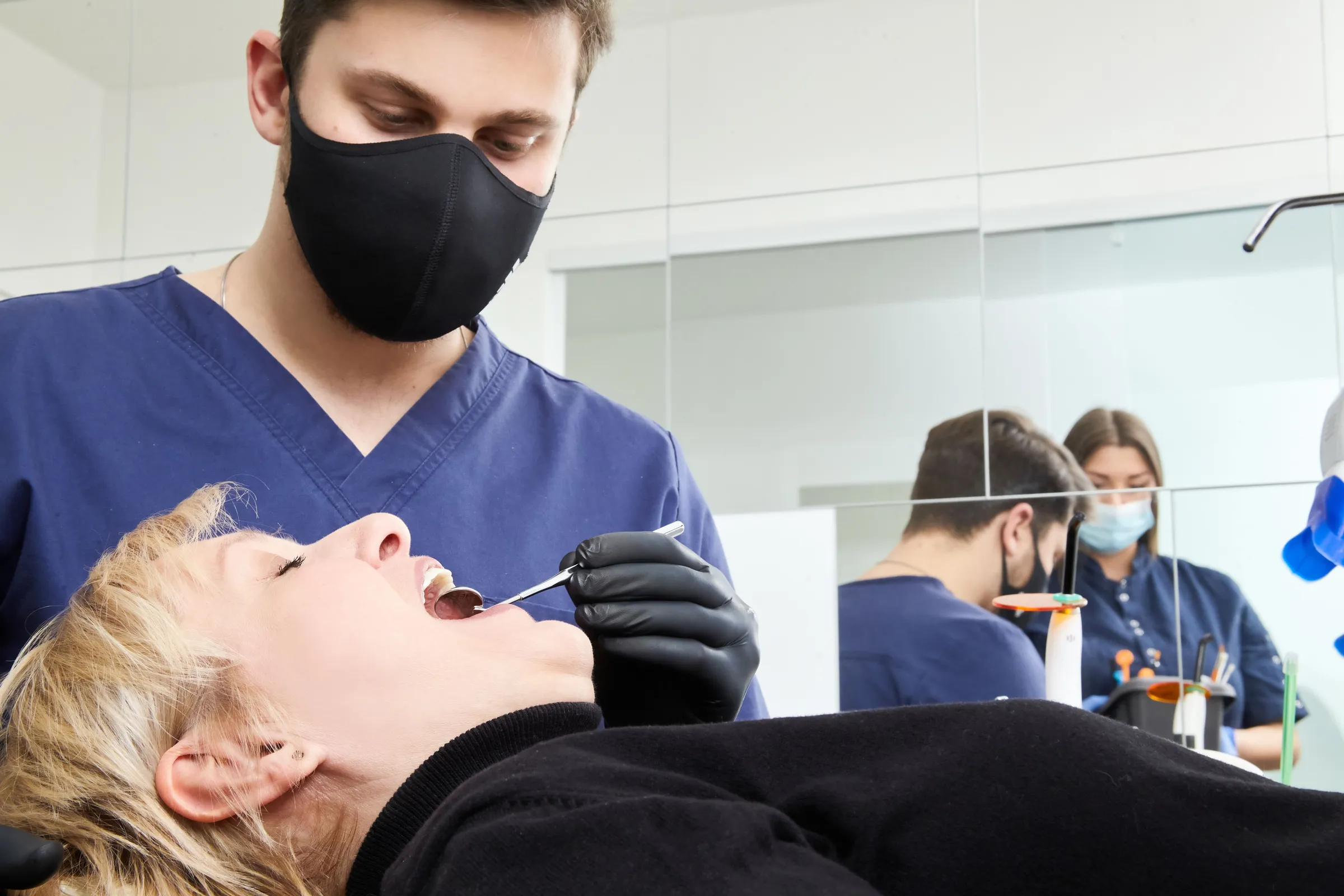
We look at your mouth, take x-rays, and talk through full, partial and implant-supported dentures for your situation. If teeth have to come out first, that is done here too.
A record of your gums and any teeth that remain. It is what the denture is built from.
Before the final set is made, you see how the teeth sit and say what you want changed: the shape, the size, the shade, how it looks when you smile.
The finished denture goes in and the bite and the edges are checked. Anything that presses or rubs is raised at this visit rather than put up with.
New dentures take getting used to, and sore spots and a changed way of speaking and eating are normal early on. Fit changes as gums and bone change over the years, so the fit needs rechecking from time to time.
Start from the set you are wearing. What is wrong with it decides what happens next.
A broken denture still carries the shape of your mouth. A damaged denture can be copied digitally, which is the route to a replacement. Bring it in, pieces and all.
Gums and bone change shape over the years, and a denture that once fit can start to move or leave sore spots. Bring it in and we will look at it, rather than leaving you to manage with adhesive.
If the set you have fits well, it can be copied digitally too. It does not have to be replaced from nothing.
Bring it in, and tell us what it is doing.
Two patients of this practice, shown with their consent.
Her old dentures were so unstable they couldn’t hold her lips forward in their natural position. The new set supports the lips and the face again.
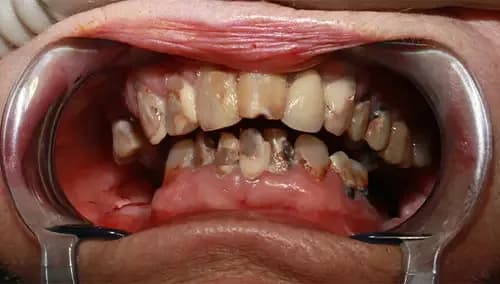
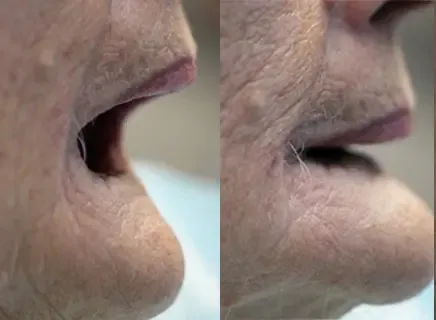
Every one of her teeth was failing. With sedation, the teeth were removed and immediate dentures placed.
A denture does not always have to be replaced to be improved. Implants can hold a set you already wear in place, instead of leaving it resting on the gum.
Retrofitting is implant work, and Dr. Orr is an Associate Fellow of the American Academy of Implant Dentistry.
Whether yours can be retrofitted depends on the denture and the bone beneath it. An exam tells you either way.









It comes down to what you have left. Full dentures replace every tooth in an arch; a partial denture fills the gaps between natural teeth that are staying. A third route, dentures held in place by implants, suits someone who has lost all the teeth in an arch and wants it to stay put. Which of the three fits is settled at an exam, since it depends on your teeth and your jawbone.
Often, yes. A denture you already wear can be retrofitted to implants, so the implants hold it in place. Whether yours can be depends on the denture and on the bone under it, which an exam decides. If you would rather start from the implants, the full-arch option is on our dental implants page.
Dental implantsBring the denture in and we will look at it, whether it is cracked, broken, loose or rubbing. A damaged denture can be copied digitally, which is the route to a replacement, and so can one that fits well. Call ahead if you can, tell us what happened to it, and bring it in with all the pieces.
Eating takes some getting used to at first, and most people start with soft foods cut small and build up. How well it goes depends a good deal on how well the denture fits, which is the reason to mention it if something is rubbing. Our patient education article on what you can eat with dentures goes through it food by food.
A full denture, a partial and a denture held by implants are three different jobs, and teeth that have to come out first add to the work. Insurance changes the total as well. We can give you a figure once someone has looked at your mouth.
Many plans cover part of a denture. We will do our best to check yours before anything is made, but please bring your plan details, and the patient is ultimately responsible for the cost. New patients are welcome, and a denture exam is an ordinary first visit. Insurance and first-visit details are on our patient information page.
Patient informationTell us when you call and again when you arrive, so the extractions can be planned around it and everyone you meet that day knows. We have weighted blankets if you would like one. And yes, sedation is available for extractions: nitrous oxide, oral or IV, for patients 13 and over.
Our sedation dentistry options