

What happens if wisdom teeth are not removed?
Sometimes nothing, and sometimes infection or decay. It depends on whether the tooth has room and can be kept clean.
What happens if you leave them
Wisdom teeth are the last molars to come in, from the late teens to the mid-twenties, according to the American Association of Oral and Maxillofacial Surgeons. Some come in straight, have room, and can be cleaned like any other tooth.
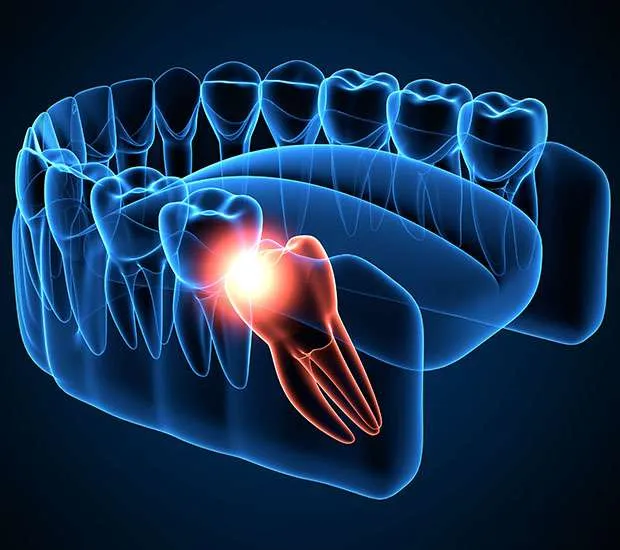
Trouble starts when a wisdom tooth has no room or the wrong angle. It may stay trapped under the gum or in the bone (an impacted tooth), or come through only partway. A partly covered tooth is hard to clean, and food and bacteria collect under the flap of gum. That can lead to infection, to decay in the wisdom tooth, or to decay in the molar in front of it.
The American Dental Association says an impacted wisdom tooth can form a cyst on or near the tooth. A tooth that looks quiet can still be checked with an x-ray.
Do wisdom teeth always need to be removed?
No. The American Association of Oral and Maxillofacial Surgeons says wisdom teeth may not need to be extracted if they grow in completely and are functional, painless, cavity-free, disease-free and in a hygienic environment with healthy gum tissue.
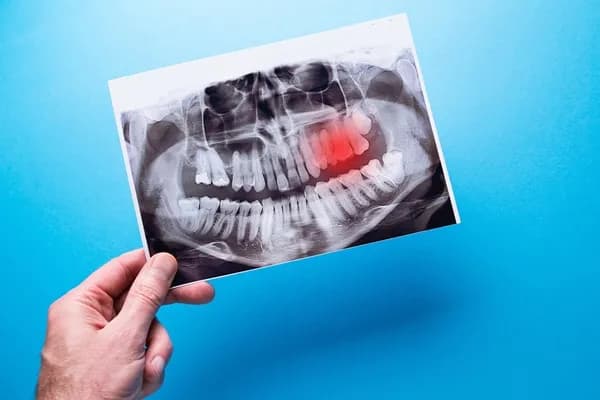
What a dentist looks at is the position of the tooth, the state of the gum around it and the tooth beside it, and what an x-ray shows.
Warning signs to watch for
Call the dentist if you notice any of these.
Pain or pressure at the back of the jaw
Can come from a tooth pressing on the one in front, or from an impacted tooth.
Red, swollen or tender gum around a tooth that is only partly through
Can be a sign of infection under the flap of gum, where food and bacteria collect.
A bad taste, or a bad smell that brushing does not clear
Can point to trapped food or an infection draining under the gum.
Decay or a sore spot on the molar in front
The wisdom tooth can make that area hard to clean, so decay there is more likely.
A jaw that is stiff or hard to open fully
Can accompany inflammation around a wisdom tooth. It needs to be looked at.
Get medical care promptly if your face or jaw swells or you have a fever. Call the office, or seek emergency care if you cannot swallow or breathe.
When removal is recommended
Removal is usually recommended when a wisdom tooth is causing problems, or when an x-ray shows it is likely to. That includes repeated infection, an impacted tooth with pain or a cyst, decay that cannot be repaired, and damage to the tooth next to it.
Wisdom teeth are removed at our Winchester office, and IV conscious sedation is available for the appointment. How a particular tooth would be removed is decided from your x-ray.
Next step
If a wisdom tooth is hurting, or you have never had yours looked at, call the office and ask for an exam and x-ray. You can also read how sedation works for a procedure like this.