

Dental implants pros and cons
An implant replaces the root of a tooth, which is why it behaves differently from a bridge or a denture, and why it needs surgery and healing time.
What are dental implants?
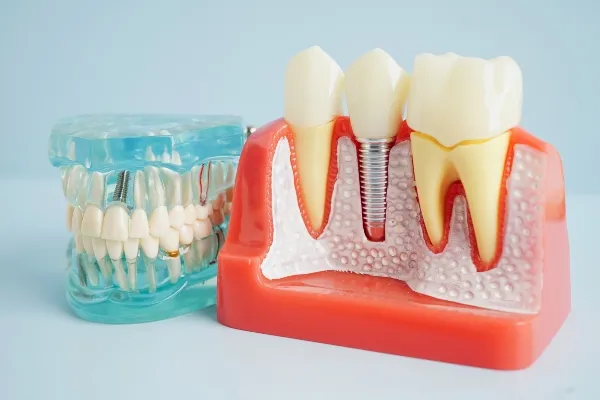
A dental implant is a replacement for the root of a tooth, not for the visible part. It is a small post, usually titanium or zirconia, placed in the jawbone. The bone grows against it, and that is what holds it steady.
A crown, a bridge or a denture is then attached to the post. That is why an implant can replace one tooth, several, or a full arch: the posts are the same, and what sits on them changes.
We place single-tooth implants and full-arch implant-supported dentures, with several systems available, including solid zirconia or titanium.
The advantages and the drawbacks
Whether the drawbacks outweigh the advantages depends on your mouth, your health and what the other options involve.
The advantages
It replaces the root
The post sits in the jaw rather than resting on the gum, so the bone around it keeps doing its job.
Nearby teeth are left alone
A bridge needs the teeth on either side of the gap to be shaped to carry it. An implant stands by itself.
It feels like part of your mouth
A crown on an implant is fixed in place, so there is nothing to take out at night and no adhesive.
It can last a long time
The American Association of Oral and Maxillofacial Surgeons says that, if properly cared for, dental implants can last a lifetime. Home care and regular check-ups are part of that care.
The drawbacks
It is surgery
Placing the post is a surgical procedure, with the usual risks of one, such as soreness, swelling and infection.
It takes time
The American Association of Oral and Maxillofacial Surgeons says healing usually takes several months once the implant is in the jawbone, so this is not a one-visit treatment.
Not everyone is a candidate yet
Thin bone, untreated gum disease and some health conditions can mean something else comes first, or a different option is the better one.
It costs more up front
An implant usually costs more at the start than a bridge or a denture.
What affects the price of implants
A price cannot be set before an exam, because it depends on your mouth.
- How many teeth are being replaced, and whether it is one tooth or a full arch.
- What sits on top of the post: a single crown, a bridge or a denture.
- Whether the bone or gums need work before a post can be placed.
- The material and system chosen.
- Whether sedation is part of the appointment.
Call the office to schedule an exam and get an answer for your mouth.
Are dental implants worth it?
That depends on what you are comparing against, and on what matters most to you. People who choose implants usually do so because they want a tooth that is fixed in place and does not involve their neighbours. People who choose against them usually do so because of the surgery, the time or the cost.
Both are reasonable choices.
Implants, bridges and dentures
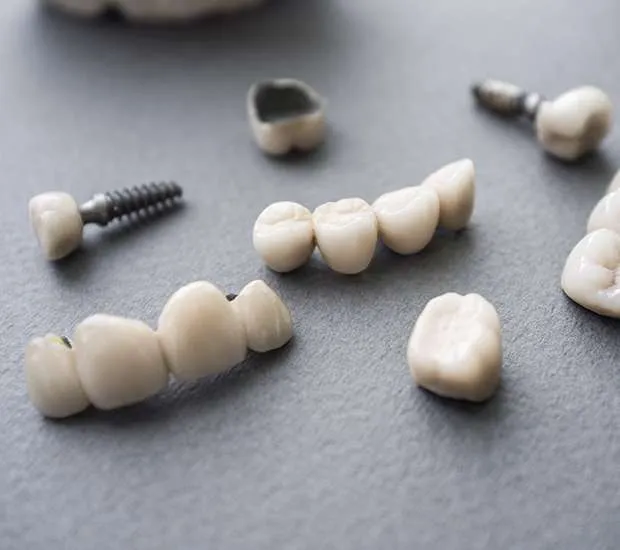
A bridge fills a gap by anchoring a replacement tooth to the teeth on either side. It is quicker than an implant and needs no surgery on the bone, but it depends on those neighbouring teeth staying healthy.
A denture replaces several or all teeth and rests on the gums. It can be a good fit when many teeth are missing, and it can also be anchored to implants, which changes how firmly it stays put.
An implant replaces the root and is the only one of the three that does not rely on neighbouring teeth or on the gum alone.
Next step
An exam shows whether an implant suits you. Call the office to schedule one, or read what a dentist checks before placing one.