

What should I brush with?
The American Dental Association recommends a soft-bristled brush that fits your mouth, used twice a day for two minutes.
The short answer
Use a soft-bristled toothbrush with a head small enough to reach your back teeth, manual or electric.
For what goes on the brush, read what toothpaste to use.
Manual or electric
Both can clean teeth well. The better choice is the one you will use twice a day.
Manual
Cost and upkeep
Inexpensive, nothing to charge, and easy to replace on schedule.
What you do
You supply the angle, the gentle pressure and the two minutes.
Who it suits
Anyone who brushes thoroughly and lightly, and keeps count of the time.
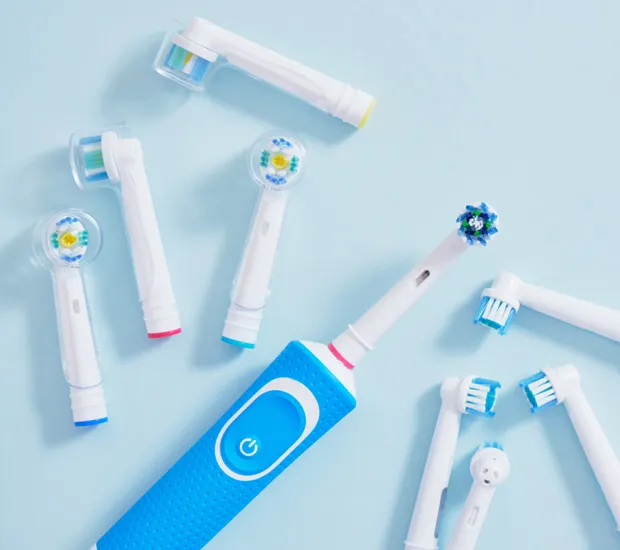
Electric
Cost and upkeep
Costs more up front, and the replaceable heads and charging are part of the routine.
What it does for you
Many have a built-in two-minute timer, and some warn you when you press too hard.
Who it suits
People who rush, press too hard, or find a thin handle hard to grip, as with arthritis.
What to look for in a toothbrush
- Choose soft bristles. The American Dental Association recommends a soft-bristled brush.
- Choose a head that fits your mouth, small enough to turn behind the last tooth and large enough to cover a couple of teeth at a time.
- Choose a handle you can hold comfortably. If it is hard to grip, you will brush less thoroughly.
- Look for the American Dental Association Seal of Acceptance to narrow a crowded shelf. Products with the American Dental Association Seal of Acceptance meet rigorous standards for safety and effectiveness, as evaluated by the ADA’s Council on Scientific Affairs.
Bristle patterns, colours and extra features are mostly a matter of taste.
How to brush with it
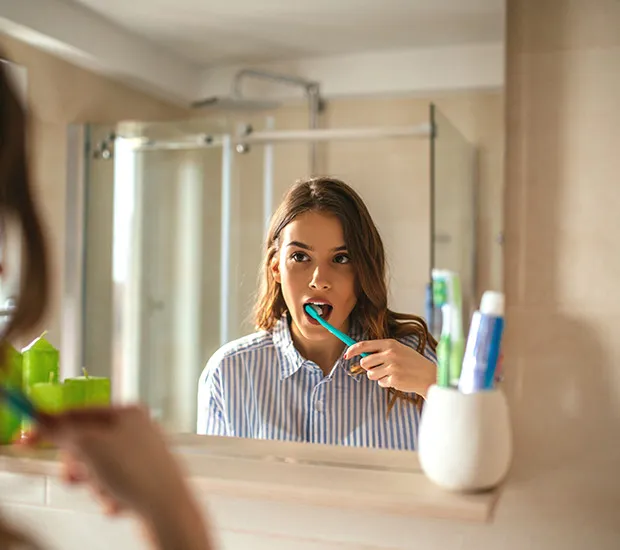
The American Dental Association says to place the brush at a 45-degree angle to the gums and move it back and forth in short, tooth-wide strokes. Clean the outside, the inside and the chewing surfaces of every tooth, for two minutes in all. A timer or a song helps.
Light pressure is enough. The American Dental Association says brushing with a hard toothbrush, or brushing too hard, can damage teeth and irritate gums.
When to replace it
The American Dental Association recommends replacing your toothbrush every three or four months, or sooner if the bristles are frayed. For an electric brush, that means the head.
Rinse it after use, stand it upright to dry, and do not share it.
If you have braces, a bridge, implants, receding gums or sensitive teeth, ask at your next visit. The dentist or hygienist can show you what your brush is missing and whether a different head or tool would help.
Next step
A brush only cleans what it reaches, so regular checkups and cleanings pick up what it misses. Call the office if you would like someone to look at how you brush.