

Holistic and biologic dentistry in Winchester
Holistic dentistry looks at your mouth as part of the rest of you. Here that means the same exams and the same dentists, with more choices about what goes in your mouth and more time to talk about how your medicines, diet and sleep show up in it.
What holistic dentistry means here
It means we treat the person, not just the teeth. Modern medicine has made remarkable advances, but it is often compartmentalized: each specialty looks closely at its own part of the body, and less at how the parts affect one another. Your mouth is where a lot of that meets. The medicines you take, what you eat and drink, how you sleep, and whether you clench or grind at night all affect your teeth and gums.
So we look at all of it. You’ll be asked about more than your teeth, you’ll hear the options for your care and what goes into each one, and your plan is built around you as a whole person, by the same dentists who see you for checkups.
biologic
\ˌbī-ə-ˈlä-jik\ adjective · related biological
- In holistic dentistry. Another name for it: care that treats the mouth as part of the whole body.
- In periodontics. Of the living tissue around each tooth. A crown is shaped to respect its “biologic width”, the seal of gum where tooth meets bone, renamed supracrestal tissue attachment in 2017.
- In bioesthetic dentistry. Teeth, jaw joints and muscles working in balance, the balance that bite equilibration and equilibrating splints work on.
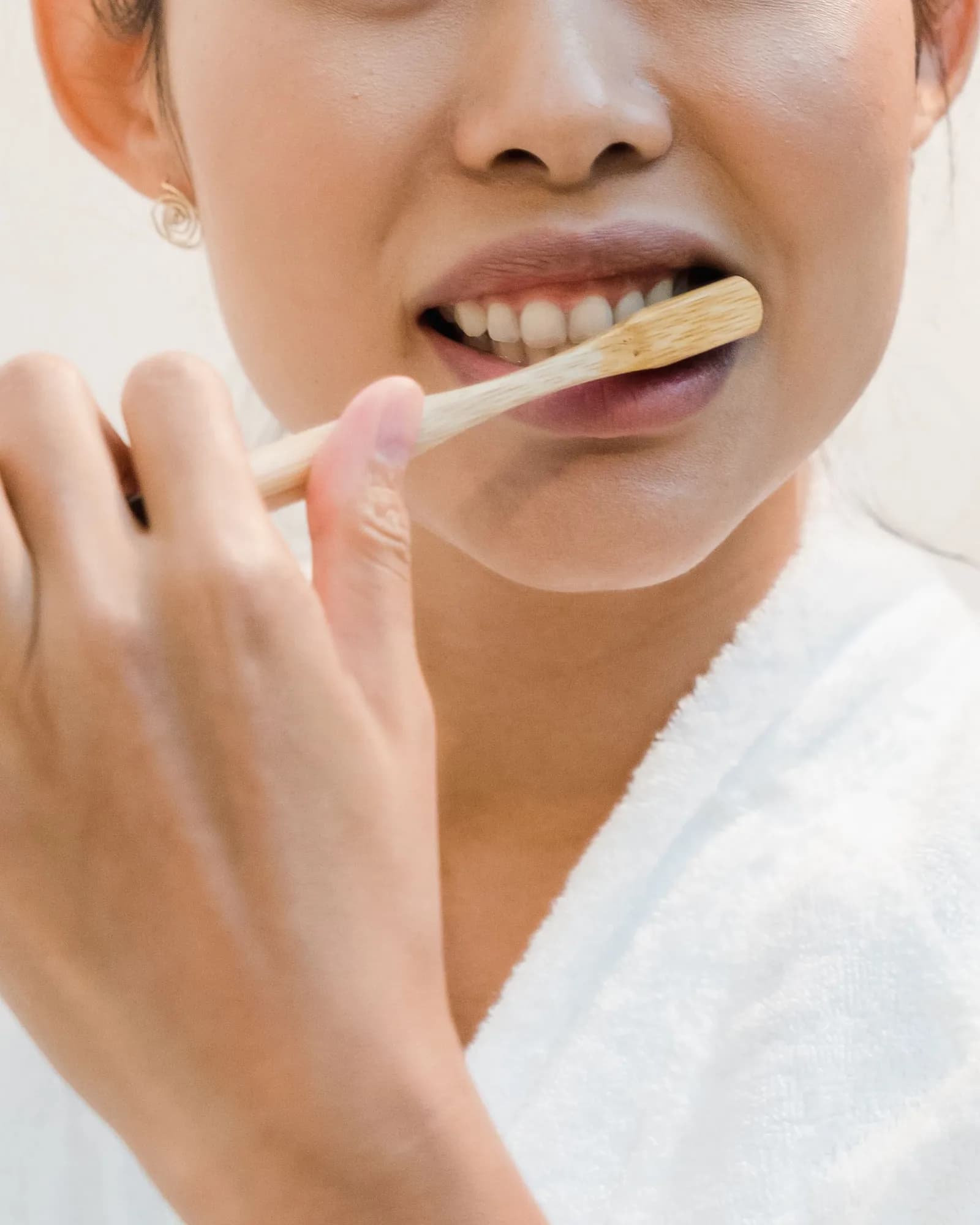
What you can ask for
Some of those options you can ask for from the start. Each is offered alongside your regular care.
Fluoride-free options
Fluoride-free options are available. Mention it when you call, or at any visit.
Natural rinses and toothpastes
If you’d rather use natural products at home, we can recommend rinses and toothpastes and talk through what’s in them.
Myofunctional therapy
Training tongue, lip and breathing habits, mainly in growing children.
How it differs from early orthodontics and aligners
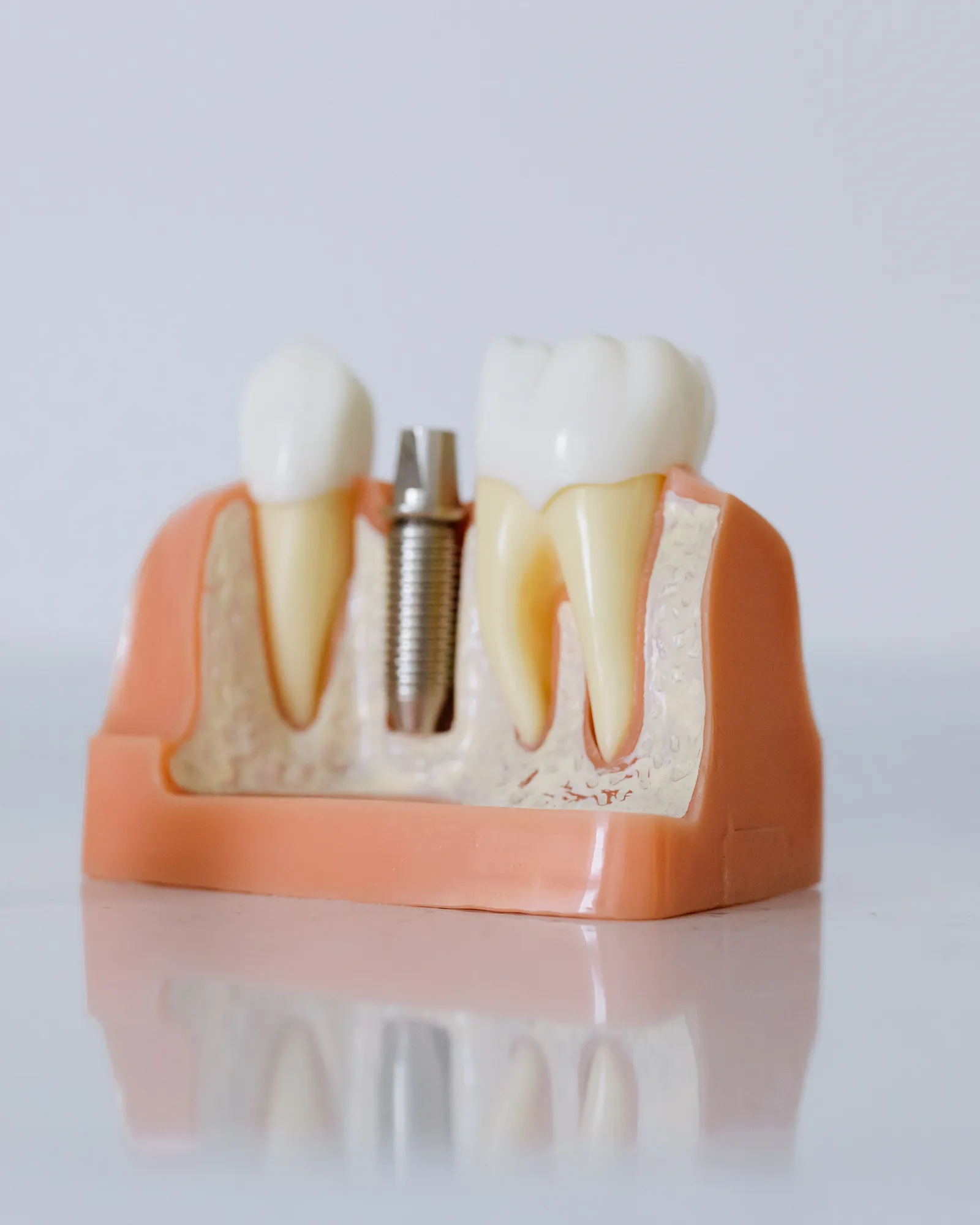
The materials, and what each is used for
A crown, an implant or the seal inside a root canal stays in your mouth for years, so what it’s made of is part of the conversation. These are offered here, and which one suits a particular tooth is settled when the work is planned.
Solid zirconia implants
The metal-free option, offered alongside titanium.
Dental implantsSolid zirconia crowns
The practice’s preferred material for crowns. A crown’s edge sits against living gum, so it’s shaped to respect the biologic width, the band of gum that seals the tooth just above the bone.
Restorative dentistryBio-ceramic root canal seal
Root canals are done here, and the canal is sealed with bio-ceramic.
Oral flora care
Materials are what goes into your mouth. Just as much depends on what already lives there. Your mouth has its own population of bacteria, living on your teeth, along your gums and on your tongue. Most of them do no harm. Cavities and gum disease grow from an imbalance in that population, when the bacteria that feed on sugar, or the ones that live below the gumline, outgrow the rest.
Oral flora care is offered at your regular visits, alongside your cleanings and checkups. It looks at that balance: what you eat and drink, what you use at home, and how your gums are doing. Ask about it at a visit and we’ll explain what it involves for you.

Medicines and nutrition
That balance doesn’t depend on your mouth alone; some of what happens there starts somewhere else. The National Institute of Dental and Craniofacial Research counts hundreds of medicines that can dry the mouth. Saliva helps protect your teeth, so a dry mouth raises the risk of decay, and it isn’t a normal part of getting older.
What you eat plays a part too. The American Dental Association notes that how often you have sugar can matter more than how much, so a sweet drink sipped through an afternoon counts as many exposures.
At your visits we’ll ask about your medicines and what you eat, and point out what we see. Any change to a medicine is for the doctor who prescribed it; we’ll tell you what we noticed so you can take it to them.

Your sleep and your teeth
Sleep affects your mouth too: clenching and grinding can wear teeth down and leave your jaw sore in the morning, and snoring can be a sign of sleep apnea, where breathing stops and starts during sleep.
A custom night guard is made here for grinding and clenching. Bite equilibration and equilibrating splints are offered too; both work on the biologic balance of teeth, jaw joints and muscles. For sleep apnea, a physician makes the diagnosis, and oral appliances are offered here once it’s made: TAP, SomnoDent and EMA.
Night guards and sleep apneaWhat a visit looks like
All of that comes together at your regular checkup: the same exam, with more questions and more choices.
Your health, not just your teeth
We ask about your medicines, your diet, your sleep and any changes in your health since your last visit.
A look at the whole mouth
Your teeth, gums, bite and jaw joints are checked, along with signs of dry mouth, grinding or clenching.
Your options, explained
If something needs doing, you’ll hear the options, what each is made of and what it involves, including fluoride-free and metal-free choices where they apply.
You decide
Nothing starts until you’ve chosen. If something we see is a question for your doctor, we’ll say so.


Your mouth and the rest of you
Your medicines, meals and sleep all show up in your mouth. Researchers have also asked the reverse question: does what happens in your mouth show up anywhere else?
Gum disease is linked to heart disease, and it’s checked for at your checkups.
The American Heart Association describes the two as associated: people with gum disease have more heart disease, but the research has not shown that one causes the other. When gum disease is found, LANAP laser treatment is offered here.

Decherd · 5 min 
Cowan · 10 min 
Estill Springs · 10 min 
Huntland · 15 min 
Belvidere · 15 min 
Tullahoma · 20 min 
Sewanee · 20 min 
Monteagle · 25 min 
Lynchburg · 25 min 
Manchester · 25 min
Common questions about holistic care
Is holistic dentistry legitimate?
Yes. Holistic means looking at the whole: your teeth, gums and jaw as part of a body whose systems affect one another. A dry mouth can start with a medicine, and worn teeth with how you sleep. Treat only the tooth and the cause stays where it is. Looking at everything that affects your mouth means finding causes that would otherwise go unaddressed, and that makes for more capable care. The exams, x-rays and training are the same as at any dental practice.
Do you use fluoride?
Only if you want it. Fluoride-free options are available.
Do you do root canals?
Yes. Root canals are done here, and the canal is sealed with bio-ceramic.
Restorative dentistryDo you take insurance?
We file with most major insurance plans, though we are not in network with all of them. If we are not in network with yours, we will still file with it as long as the plan allows out-of-network coverage. Not sure about yours? Call the office with the name of your plan.
Patient informationCan you recommend a natural toothpaste?
Yes. Ask at your next visit and we’ll suggest options that suit your teeth and your preferences.
What toothpaste should I use?